Branding: The one thing that hasn’t changed
When asked what has stayed constant over 30 years, Neil didn’t hesitate
“Branding. If you produce a good product or service and you’re in
business long enough, your brand ends up driving most of your
revenue.”
Consumers choose Nike, Toyota, or BMW not because they Googled them — but because the names live in their minds.
For marketers starting today, the lesson is simple: brand is your long-term moat.
Neil recommends using the Rule of Seven — making sure people see your brand at least seven times across multiple touchpoints. Content repurposing, omnichannel consistency, SEO, email, paid ads, blogging — all of these together build memorable brands.
How Neil uses email as a brand & revenue engine
Email remains one of Neil’s highest-performing channels, but not because he sells aggressively. Instead:
“80–90% of our emails are educational. Only 10–20% sell.”
This ratio builds trust.
It’s why email drives both conversions and long-term relationships for NP Digital.
Neil tracks:
His strongest warning was about list hygiene:
“If you have a million people but a 10% open rate, something’s wrong.”
He insists on scrubbing inactive subscribers because low engagement hurts deliverability — even for new signups.
Where email is headed: Interactivity inside the inbox
Neil shared a future he believes is already unfolding:
“Imagine selecting a t-shirt size and buying right inside Gmail
without going to a website.”
He’s seeing this evolve in early forms — and across his own tests:
“We saw around a 9% increase in conversions with interactive emails.”
Not massive, but meaningful — and it compounds at scale.
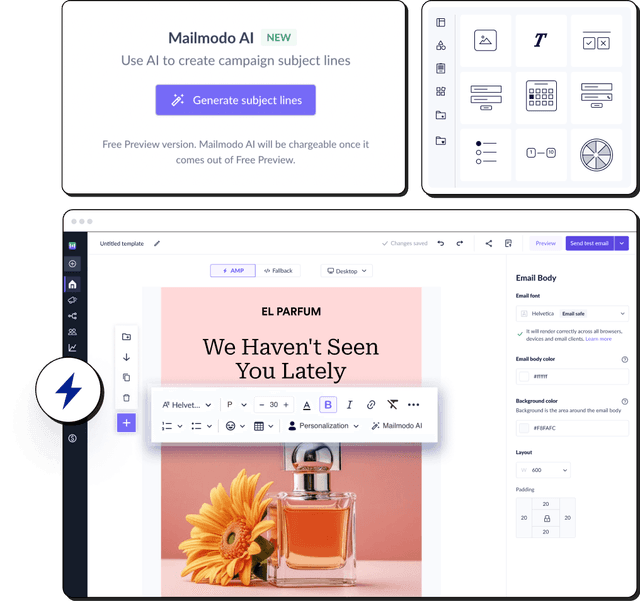
Neil’s view aligns closely with what platforms like Mailmodo are enabling today — bringing product selection, cart actions, and other interactive email experiences, reducing friction and lifting conversions without forcing users onto a website.
What has worked for Neil in email: Simplicity over hacks
Neil doesn’t rely on gimmicks. Instead, he focuses on proven fundamentals.
Here’s what he shared from his own experiments:
1. Keep your list clean
Scrubbing boosts engagement and deliverability.
2. Use casual subject lines
“Like a friend would send you,”
e.g., “Neil, check this out” (lowercase, conversational).
3. Use shorter subject lines
They perform better across devices.
4. Text-based emails outperform heavy designs
They drive more opens, more clicks, and better deliverability.
5. Use GIFs when you need visual motion
Instead of heavy or embedded videos.
6. Keep emails simple
This was the theme he returned to multiple times. Simplicity outperforms sophistication.
Other Channels Neil Believes Marketers Should Adopt
Neil highlighted a few channels worth adding to today’s marketing mix:
Threads — fast-growing and underleveraged
SMS marketing — still highly underutilized
Micro-influencers —
“Massive ROI, yet corporations don’t use them enough.”
His overarching point: most tactics work for both B2B and B2C. The real issue is execution — and sticking with channels long enough to see results.
How Neil chooses whether a channel is worth it
His framework is surprisingly simple:
See what competitors are doing
Run small tests
Measure the ROI
Double down on what works
Drop what doesn’t
“People overcomplicate it. Just test, measure, repeat.”
Neil’s Honest Take on AI in Marketing
Neil believes marketers misunderstand AI’s timeline:
“People overestimate AI in the short run and underestimate it in the
long run.”
He has tested AI across:
Content creation (not great yet for rankings)
Social images (weak performance)
Data consolidation and insights (promising)
Where he sees long-term email impact:
“Imagine personalizing every email for a million people.”
This direction aligns with what AI email marketing tools like Mailmodo aim to make easier—using data and automation to help marketers personalize at scale, create dynamic experiences inside the inbox, and eventually move toward the kind of individualized email delivery Neil describes.
Key takeaways
Neil’s core message is that great marketing still comes down to fundamentals: build a brand people remember, simplify your messaging, keep your email list clean and engaged, and deliver value far more often than you sell. Interactive emails, micro-influencers, and new channels like Threads offer fresh opportunities, but the real differentiator is execution and continuous experimentation. AI will transform personalization over time, but for now, marketers win by staying consistent, testing relentlessly, and focusing on what genuinely matters to their audience.