Why email is still thriving today
When asked whether email is “dead,” Brian was clear — email is stronger than ever.
He explained that even over the last decade, while new messaging platforms appeared, email has remained the most cost-efficient, scalable, and proven channel for reaching customers. In fact, during the pandemic, many businesses leaned on email even more heavily because they lost access to in-person channels and needed a reliable way to communicate.
Despite that, inbox placement has become more complex. Gmail, G Suite, Yahoo, and other providers aren’t just scanning keywords anymore — they’re tracking sender behavior, recipient behavior, and long-term patterns. That shift is why marketers must rethink how they manage their lists, segment their audience, and plan campaigns.
Why emails land in spam
Many marketers assume emails land in spam because of words like “free,” “flash sale,” or “invoice.” While those can matter, Brian emphasized these are the basic layer of filtering. Modern email deliverability problems come from deeper, behavior-driven triggers.
Here’s why most brands fail:
According to Brian, one of the biggest reasons brands hit spam is simple:
“People are emailing a database they’ve been sending to for years and
they’ve never checked if those emails are still good.”
People change jobs, companies shut down, and addresses get abandoned — and every time you send to one of those dead inboxes, you trigger a hard bounce. Hard bounces are one of the most damaging signals for your sender reputation because they indicate you’re not maintaining list hygiene.
Over time, this pushes more of your campaigns into spam.
2. Your audience is marking you as spam without you realizing it
Mailbox providers give senders feedback loops. Brian noted that:
“When people mark you as spam, that’s something you need to know — and
you need to stop emailing them.”
But most marketers never check these insights.
As a result, they continue emailing people who actively told Gmail they don’t want the emails. This leads to domain-wide reputation drops that affect every future campaign.
3. You’re sending the same message to everyone — even when it’s irrelevant
The webinar made a strong point: being a marketer is not enough — you have to think like a customer.
Brian gave a simple example: he receives women’s clothing promos from a brand where he only buys men’s clothes. That mismatch makes recipients ignore or spam-mark emails, which mailbox providers track closely.
Irrelevant content = low engagement = worse deliverability.
4. You continue emailing non-engagers for months or years
Mailbox providers treat engagement as a signal of trust. If someone hasn't opened your emails for months, continuing to email them tells Gmail:
“This sender’s content isn’t valuable.”
This drags down inbox placement for the entire list — even the engaged users.
5. You’re using shortened URLs
One of the clearest warnings Brian shared was about link shorteners:
“Shortened URLs are a big no-no right now.”
Mailbox providers can't see what’s behind the redirect, so they treat it as suspicious behavior — the same tactic used by spammers. Even one shortened link can influence inbox placement.
5 expert-backed ways to improve inbox placement
Below are the five methods emphasized in the session, based on what has actually worked — each one tied to what mailbox providers reward today.
1. Maintain a clean, validated email list
This was one of the strongest points in the conversation: healthy lists outperform large lists.
Brian mentioned that ZeroBounce often removes contacts customers think are valuable, but in reality:
The takeaway was clear:
The smaller, cleaner list will always deliver better results than the large, outdated one.
2. Monitor your sender reputation regularly
Your sender reputation determines whether mailbox providers trust you. Tools like Postmaster help you see:
if spam complaints are increasing
whether your reputation is trending down
if mailbox providers see you as risky
Brian pointed out that many marketers don’t track this at all — and only discover issues after their emails start landing in spam.
Building a habit of regular monitoring protects future deliverability.
3. Test inbox placement before sending your campaign
This was a practical, actionable method Brian strongly recommended:
“Send your campaign to test addresses first, and see whether it lands in inbox, promotions, or spam.”
Testing before sending lets you identify email deliverability issues early:
links causing spam
too many images
problematic copy
domain reputation issues
Changing one element — even a single URL — can shift inbox placement.
This step ensures surprises don’t hit you after the full send.
4. Segment your audience by engagement
Mailbox providers treat engagement like a ranking algorithm.
If your campaign starts by sending to your most engaged users — the people who consistently open and click — you build positive signals immediately.
This warms up your reputation for the rest of the send.
As Brian explained:
High engagement → Higher trust → Better placement → Better performance across all segments
Starting cold (sending to everyone equally) creates the opposite effect.
5. Remove non-engagers and run a breakup campaign
If someone hasn’t opened your emails in 6–12 months, continuing to email them hurts your reputation.
Brian recommended pulling these contacts into their own segment and sending a breakup-style message like:
“Do you still want to hear from us? Click here to stay.”
Anyone who doesn’t click is likely hurting you more than helping.
This step protects your domain and boosts inbox placement for your active audience.
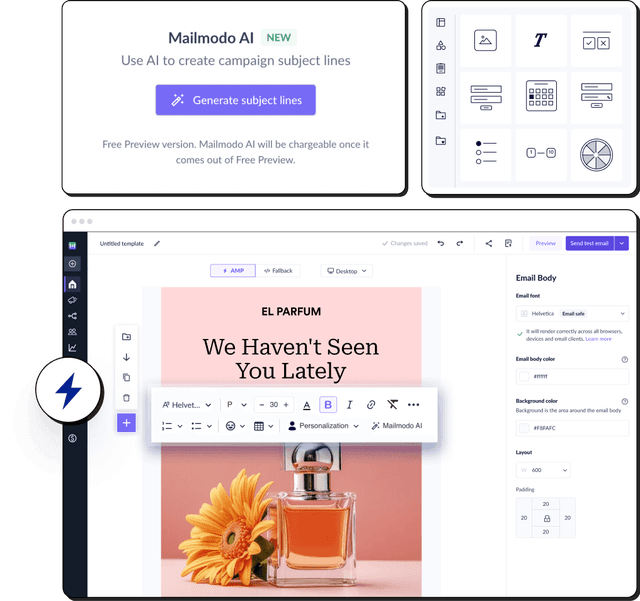
AMP emails: a powerful way to build engagement signals
Toward the end of the session, Brian shared why he loves AMP emails:
"They let recipients take action inside the email — from scrolling product carousels to submitting reviews."
That interaction sends positive signals to mailbox providers because it clearly shows:
AMP emails can strengthen your sender reputation naturally because they encourage more in-email activity — something that traditional HTML emails can't do.
Common mistakes marketers make
Many deliverability issues aren’t caused by lack of knowledge — they come from old habits and shortcuts.
Marketers keep sending to outdated lists because they feel “bigger is better,” even when hard bounces quietly damage their domain. Link shorteners stay in templates because they’ve always been there. Segmentation gets skipped because blasting everyone is faster. And blacklist checks get ignored because teams only investigate deliverability when something breaks.
These patterns are understandable — but they’re also exactly what nudges campaigns into spam over time. Breaking them is the simplest way to regain inbox placement.
Campaign-ready deliverability checklist
Use this short pre-campaign check to avoid last-minute surprises:
Validate your list
Remove invalids, hard bounces, and risky contacts
Check sender reputation in Postmaster
Make sure your domain is not blacklisted
Run inbox placement tests
Avoid shortened URLs
Keep a balanced text-to-image ratio
Start with your most engaged subscribers
Move non-engagers into a separate segment
This is the streamlined version of what was repeatedly emphasized in the webinar.
Key takeaways
Inbox placement today is shaped by relevance, list quality, and engagement — not bulk volume. Hard bounces, outdated addresses, and spam markings erode your sender reputation, while clean lists and high-engagement segments strengthen it. Testing inbox placement before campaigns, monitoring domain reputation, and avoiding triggers like shortened URLs all help maintain trust with mailbox providers.
Techniques like AMP emails and isolating non-engagers strengthen engagement signals over time. Ultimately, consistently landing in the inbox means sending intentional, relevant messages to people who actually want them — a theme reinforced throughout Brian’s insights.