10 Guerrilla marketing examples
Guerrilla marketing thrives on creativity, surprise, and the ability to disrupt everyday experiences. Unlike traditional advertising, these campaigns don’t rely on massive budgets, they rely on imagination. By taking risks and thinking outside the box, brands can create memorable moments that audiences talk about long after the campaign ends.
1. Red Bull: Stratos space jump
In 2012, Red Bull executed one of the boldest marketing stunts in history: sponsoring Austrian daredevil Felix Baumgartner’s jump from 128,000 feet above Earth. The world watched live as he broke the sound barrier and landed safely. The jump was broadcast on YouTube, drawing in more than 8 million concurrent viewers, the largest live-stream audience at the time. Red Bull branded every aspect of the mission, from the suit to the capsule.
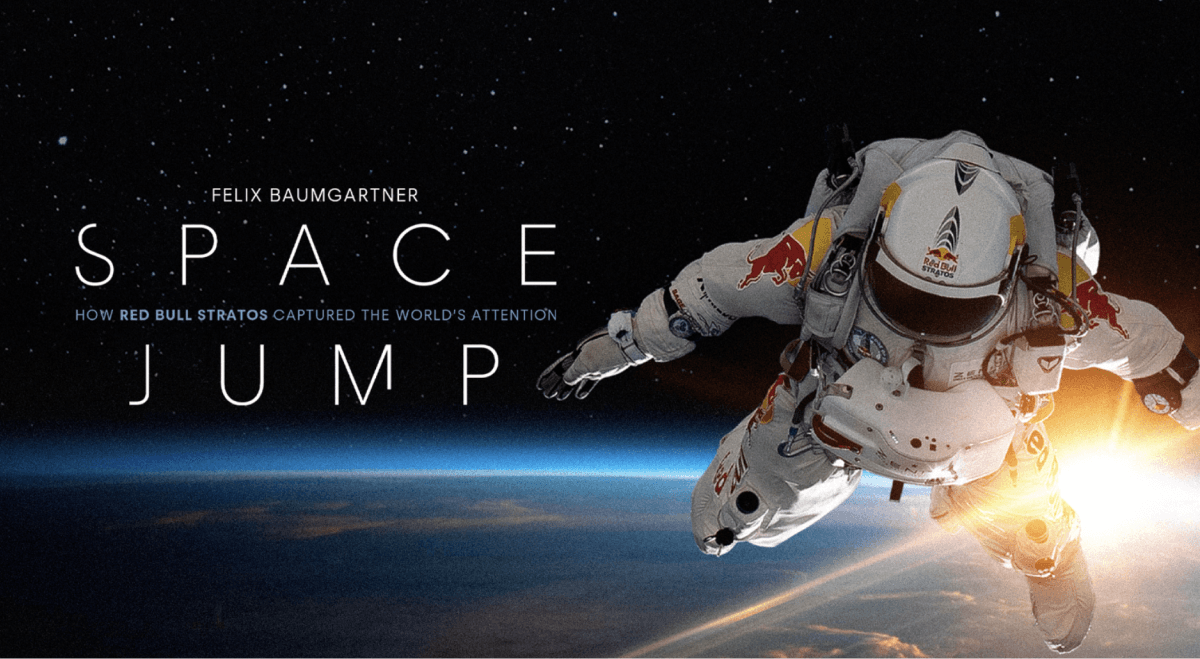
Why it worked: It wasn’t just a stunt, it was a spectacle that aligned perfectly with Red Bull’s adventurous identity. The campaign showed the brand wasn’t selling energy drinks, but a lifestyle of pushing limits.
Outcome: Billions of media impressions, global recognition, and one of the most iconic moments in guerrilla advertising history.
2. Coca-Cola: “Happiness Machine”
Coca-Cola wanted to reinforce its association with joy, so it placed a vending machine at a U.S. college campus that dispensed surprises beyond soft drinks like pizzas, flowers, and oversized Coke bottles. Hidden cameras captured students’ delighted reactions, and the footage quickly went viral. The campaign spread through YouTube and social media, amplifying the emotional reactions of the students.

Why it worked: It transformed a simple act, buying a Coke into a magical moment of surprise, proving that brand experiences don’t need to be expensive to be impactful.
Outcome: Millions of online views, free global publicity, and stronger emotional resonance with Coca-Cola’s message of happiness.
3. Volkswagen: “Fun Theory” piano stairs
Volkswagen launched its “Fun Theory” campaign to promote eco-friendly behavior. In a Stockholm subway, ordinary stairs were converted into working piano keys, encouraging commuters to choose the stairs over the escalator. Each step played a note, turning daily commutes into playful, musical experiences. Hidden cameras documented people laughing, recording, and engaging with the installation.

Why it worked: It connected the brand to fun innovation and nudged people toward healthier habits, proving that simple changes could influence human behavior.
Outcome: Stair usage increased tremendously, while the campaign’s video went viral, linking Volkswagen with creativity and positive change.
4. Sony BRAVIA: “Balls” campaign
To showcase its BRAVIA TVs’ superior color quality, Sony unleashed 250,000 colorful bouncy balls down the steep streets of San Francisco. The striking visuals created a magical scene, later captured in a TV ad and shared globally. The shoot was real, no CGI. Streets were shut down, and cameras captured the spectacle from multiple angles.
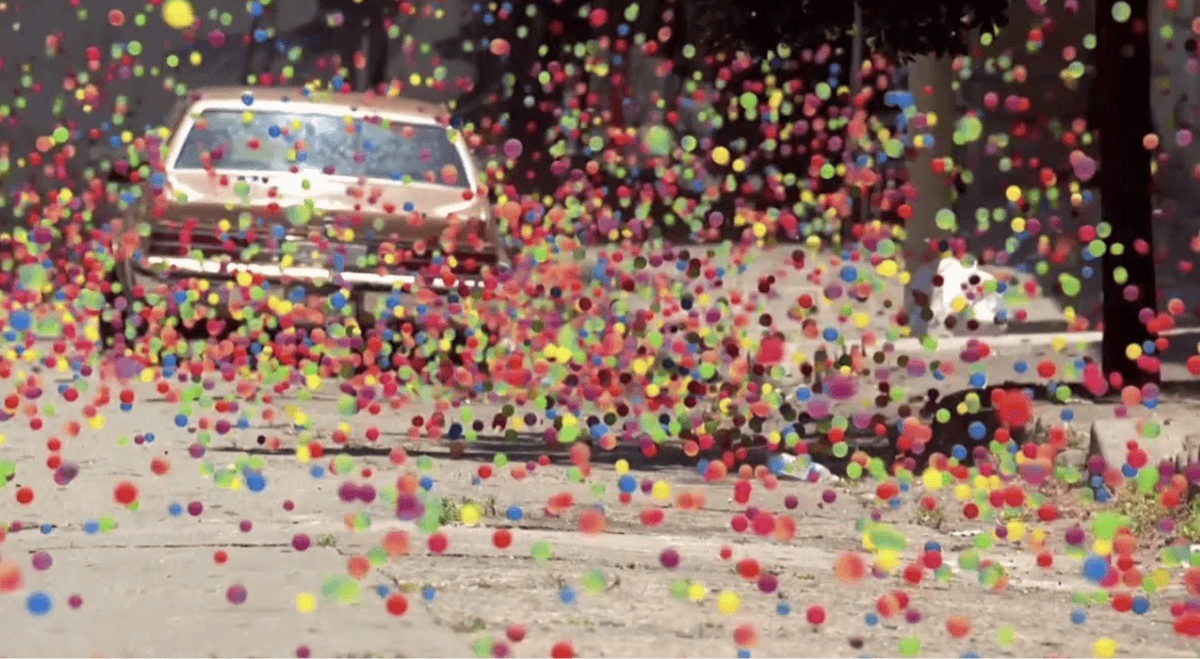 Why it worked: It created a vivid metaphor for vibrant colors in a way that words or traditional ads couldn’t. The authenticity of the stunt made it more powerful.
Outcome: Millions of views, viral buzz, and a strengthened perception of Sony as a brand of innovation and quality.
5. IKEA: “Subway apartment” in Paris
IKEA wanted to show how its furniture could transform even the smallest spaces. To prove it, they furnished an entire subway carriage in Paris and invited commuters to experience the products firsthand. The subway was fully outfitted with IKEA furniture, creating a cozy, lived-in feel. Commuters could sit, relax, and use the furniture during their ride.

Why it worked: It turned an ordinary daily experience into an unexpected, memorable one while directly showcasing IKEA products in action.
Outcome: Significant media coverage, thousands of interactions, and reinforced brand positioning as functional, stylish, and affordable.
6. Folgers: Steaming coffee manholes
Folgers turned New York City’s manholes into giant coffee mugs. Vinyl decals of coffee cups were placed around the manhole covers, with the steam from below resembling hot coffee rising. The visuals were simple but effective, seamlessly blending with the urban environment.
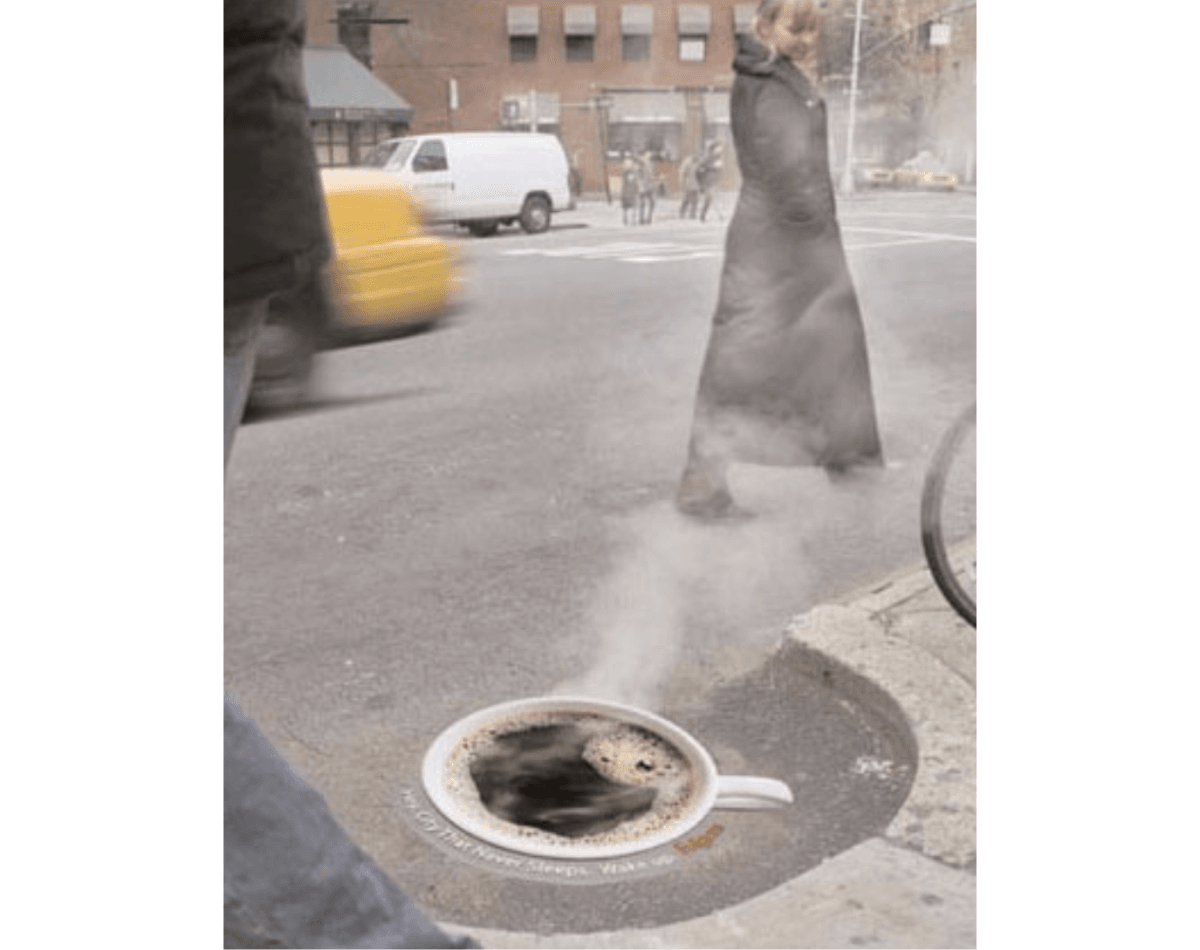 Why it worked: It caught people off guard in their daily routine, creating instant cravings and brand recall.
Outcome: Strong local buzz, memorable photos circulating online, and clever reinforcement of Folgers as the go-to coffee brand.
7. 3M: Security glass “Break Me If You Can”
To promote its ultra-strong security glass, 3M set up an installation with a transparent case filled with cash. The challenge: anyone who could break the glass could keep the money. No one succeeded. Passersby lined up to try, hitting and kicking the glass, while 3M staff monitored the display.
 Why it worked: It was highly interactive and provided a dramatic, real-life demonstration of the product’s value.
Outcome: Huge crowds, viral photographs, and boosted credibility for 3M’s security products.
8. UNICEF: Dirty water vending machines
To raise awareness about unsafe drinking water, UNICEF set up vending machines in New York that dispensed bottles of dirty water labeled with real waterborne diseases like cholera and typhoid. The machines drew attention because they looked like normal vending machines, shocking people upon closer inspection.

Why it worked: It brought a global issue into the everyday context of New Yorkers, sparking empathy and conversation.
Outcome: Significant donations, press coverage, and stronger awareness for UNICEF’s clean water initiatives.
9. ALS Ice Bucket Challenge
In 2014, the ALS Association launched one of the most viral campaigns in history. People dumped buckets of ice water over themselves, filmed it, and challenged others to do the same, all to raise awareness and donations for ALS research. The challenge spread organically through social media, amplified by celebrity participation from Bill Gates to Oprah Winfrey.
 Why it worked: It combined a simple action, a sense of fun, peer pressure, and global shareability.
Outcome: Raised over $115 million for ALS research and became a cultural phenomenon.
10. KitKat: “Have a Break” benches
KitKat cleverly redesigned public benches to look like partially unwrapped KitKat bars, encouraging people to sit down and “take a break.” The installations were placed in high-traffic public areas where they would be seen and used daily.

Why it worked: It connected the brand’s slogan directly with a real-world action in a fun, playful way.
Outcome: Boosted everyday brand visibility and created a memorable piece of street furniture advertising.
Lessons and tips for using guerrilla marketing in your brand
Guerrilla marketing isn’t just for big brands. Any business can use creativity to stand out. Here’s what to keep in mind:
Start with your audience: Design campaigns that spark an emotional connection.
Use everyday spaces creatively: Transform ordinary places into brand moments.
Design for shareability: Make it easy for people to capture and share.
Creativity over budget: A clever idea can outperform expensive ads.
Surprise and emotional connection: Unexpected moments stick in memory.
Blend offline and online presence: Extend reach by encouraging social sharing.
Conclusion
Guerrilla marketing shows that you don’t need massive budgets to make a big impact. With the right idea, you can surprise, delight, and engage your audience in unforgettable ways. Start brainstorming simple, low-cost ideas today, your next campaign could be the one that everyone’s talking about!