1.Patagonia’s "Don’t Buy This Jacket" campaign
Patagonia stands out as a timeless case of genuine, environmentally friendly marketing. In a very bold 2011 New York Times ad released on Black Friday, the outdoor clothing company directly told consumers, "Don't Buy This Jacket." The campaign talked about the environmental cost of consumption and invited the customers to think twice about buying, and instead, they could fix, share, or resell their gear. Such a radical honesty was absolutely in line with the brand's core values of durability and being eco-friendly.
Outcome:
The brand displayed radical transparency; hence, a very big brand trust was created.
The communication was backed up by the company’s long-term activities, for example, its Worn Wear program for repairs.
Patagonia was able to paradoxically increase its sales and loyalty.
It helped Patagonia to be not only a real leader and trendsetter but also recognized as such by others.
2. IKEA’s circular business model
IKEA’s eco-friendly marketing strategy is exemplified by real measures such as its "Buy Back & Resell" program, in which customers can deliver old IKEA furniture and get store credit. The firm also commits to eco-friendly sourcing and makes use of such materials as bamboo and recycled wood for its goods.
Outcome:
Thus, the company turns sustainability into a democratic concept, which is affordable and a wise choice for the mass market.
The company protects itself from facing resource shortages in the future and, at the same time, builds strong customer loyalty.
IKEA’s move is not only about marketing campaigns, but it also shows the company’s long-term vision far beyond that.
3. Unilever’s "Sustainable Living Brands"
Unilever made sustainability the center of its corporate strategy with the help of the "Sustainable Living Brands" program. This program identifies brands like Dove, Ben & Jerry's, and Hellmann's that have a strong social or environmental purpose and are thus groupers. Unilever announced that these purpose-driven brands have increased their revenue 69% faster than the rest of the portfolio.
Outcome:
The company connects purpose directly with brand identity and product innovation.
The project demonstrates that sustainability can be a major driver for business growth, rather than just a cost center.
It produces a brand portfolio that deeply connects with the modern, aware consumer.
The program helped the company to take the step from a niche project to a core company-wide mission.
4. Ben & Jerry’s activism-based marketing
Ben & Jerry's uses social and environmental activism as a seamless part of its marketing and product development. The ice cream brand makes flavors and campaigns for climate change ("Save Our Swirled") or criminal justice reform ("Justice ReMix'd") types of issues.
Outcome:
One of the main reasons for the success of the campaign is that the activism reflects the long-term values of the founders that have been there for years, and, thus, there is no greenwashing.
It transforms customers into fervent brand advocates and enthusiasts.
The brand is not scared to lose some consumers by this move, thus making its relationship with the core, like-minded consumers stronger.
Executing its platform for advocacy, it allows customers to be a part of the solution by simply making a purchase.
5. Adidas x Parley for the oceans
Adidas collaborated with Parley for the Oceans, aiming to produce a line of environmentally friendly products, such as sneakers and sportswear. This partnership turns a severe environmental problem - marine plastic pollution- into a source for high-quality products. Their "Run for the Oceans" made the community part of the movement by linking the athletic activity with environmental funding.
Outcome:
It is a smart as well as a brilliant example of innovation, which makes waste attractive to consumers.
This partnership creates an engaging, straightforward story that the consumers can easily understand and support.
With this initiative, Adidas has effectively set itself apart from its competitors in the athletic wear market.
The company really shows that it is ready to commit to solving such a global issue through real actions rather than just saying it.
6. TOMS Shoes' evolving mission
TOMS was the brand that was built around the concept of "One for One", where the company would donate a pair of shoes to a child in need for every pair purchased. TOMS has moved on from the "One for One" model, but it is still committed to sustainability through its responsible packaging practices.
TOMS takes great care of its packaging by using 100% recycled, recyclable, or sustainably sourced materials for its shoeboxes and is a member of the CanopyPack4Good initiative that supports forest conservation.
Outcome:
The simple and strong "One for One" message was the main driver behind the brand's recognition and the goodwill it developed.
The brand provides consumers with an easy, emotional, and clear reason to pick TOMS over other brands.
It confirms that eco-friendly marketing can include both social and environmental aspects of responsibility.
7.Lush cosmetics' naked packaging
Lush Cosmetics turned "naked" (packaging-free) products into a major element of its brand personality. More than half of its product range, which also includes solid shampoos and conditioners, is marketed without packaging, thus plastic waste is cut down greatly.
Lush uses recycled materials for the products that come in packaging and gives back to customers through a pot recycling program that rewards them.
 Source: Lush
Outcome:
The company doesn't shy away from the problem of plastic waste but instead throws light on it with a solution that is both visible and impactful.
The marketing move works out to be a major saving from the costs of packaging materials, which can then be put to use for other things.
It helps the brand to stand out and become memorable in the highly competitive beauty industry.
The firm's solid, long-life products, in most cases, turn out to be a better value, thus raising customer satisfaction.
8. The Body Shop’s refill stations
The Body Shop is a brand that has always stood for the production of beauty products that are not only cruelty-free but also ethically sourced. The main element of its green marketing is the launching of in-store refill stations. Consumers can return used bottles of common items like shampoo and body wash to be refilled.
Outcome:
It establishes a practical and user-friendly method for customers to adopt eco-friendly habits.
The initiative increases store visits and customer loyalty, thus deepening the relationship with regular shoppers.
The move is spot-on with the brand's past, which is characterized by interlinked environmental and ethical issues; thereby, its authenticity is deepened.
It is a visual representation of the brand's commitment to sustainability, making it an integral part of the shopping experience.
9. Starbucks' waste reduction programs
Starbucks is avoiding the environmental consequences of disposable cups by working on several fronts. The business launched reusable cup programs, strawless lids, and set a target to halve waste by 2030. In some places, their "Borrow a Cup" initiative enables customers to take a reusable cup and return it at a later time, thus marrying convenience with sustainability.
Outcome:
By modifying the behaviour of customers on a massive scale, the brand is contributing to the solution of the problem.
The initiatives are convenient for customers, thus the probability of them taking part is high.
It is a good example of a comprehensive solution, ranging from new products (lids) to large-scale initiatives (reusable programs).
10. Apple’s material innovation
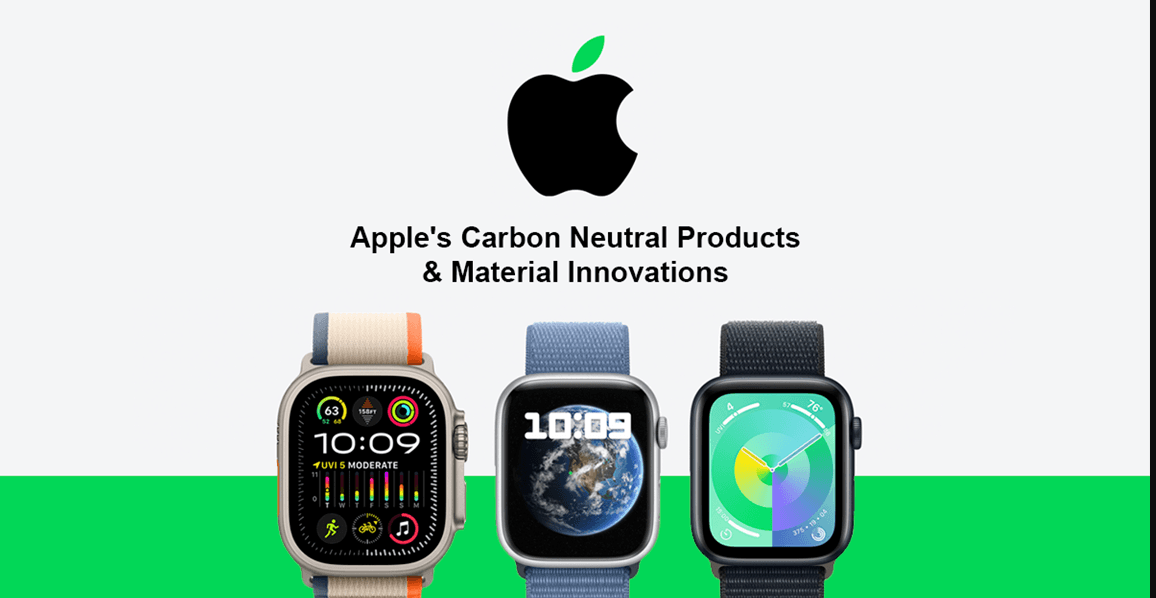
Apple’s green marketing is heavily reliant on the changes the company is making in the use of recycled materials across its product lines. By 2025, the firm is committed to using only 100% recycled cobalt for batteries designed by Apple and 100% recycled rare earth elements for all magnets. The push for material innovation is a large part of the company's environmental messaging.
 Source: Apple
Outcome:
One of the ways to tell the sustainability story is to align it with Apple's reputation for being a pioneer.
The points made in the statement are clear, ambitious, and supported by a definite timeline; hence, they are more trustworthy.
It is a step in the right direction towards the problem of resource extraction for electronics.
Making sure the brand stays in line with the increasing worldwide rules on electronic waste and the supply chain is another plus for the brand.
11.Tesla’s core mission
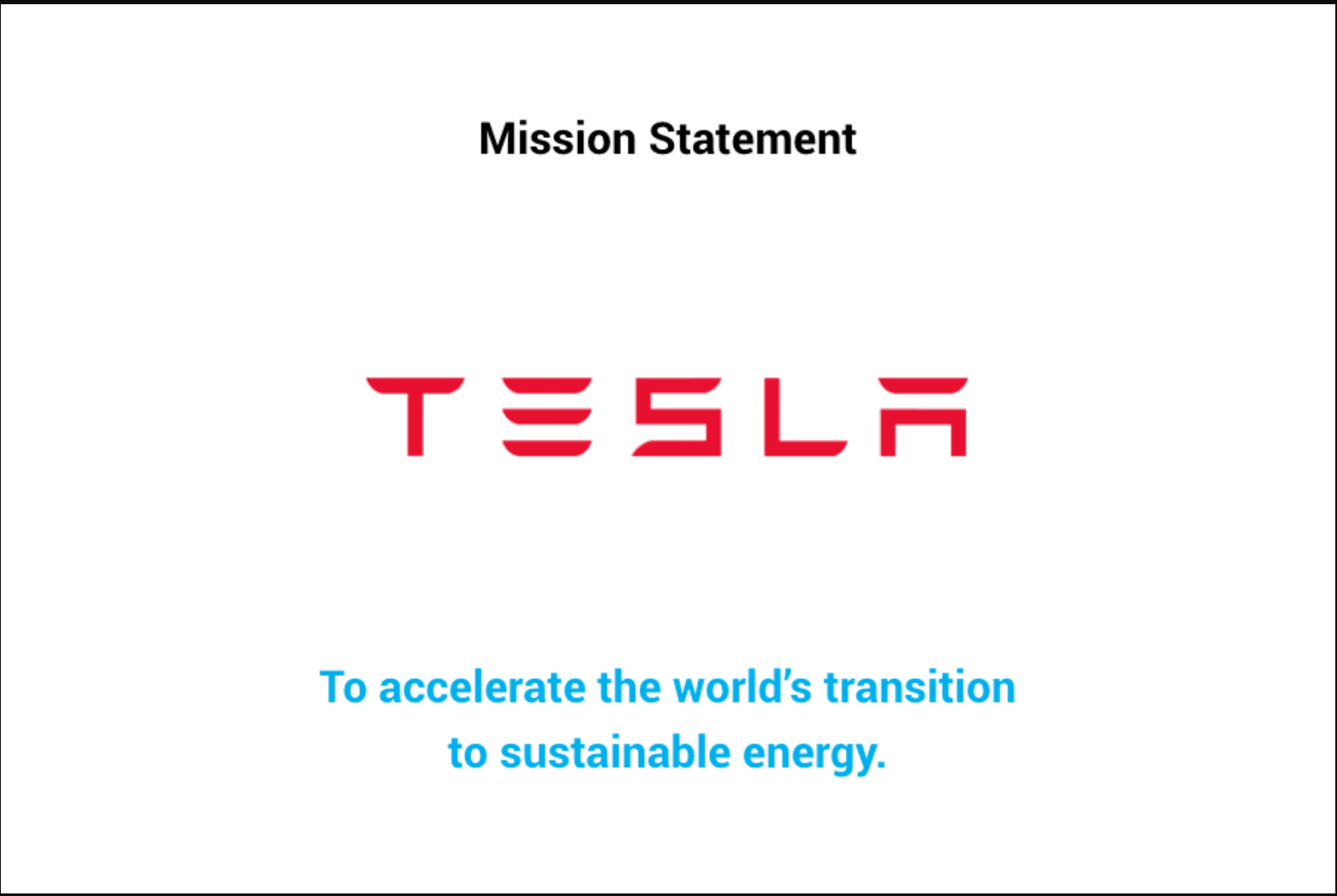
Tesla may be selling electric vehicles, but the most sustainable marketing tool that sustains the brand over time is the core mission itself: "to accelerate the world's transition to sustainable energy". Every single thing from its cars to solar roofs is marketed as the "larger, purpose-driven" vision, helping the planet.
 Source: X
Outcome:
This is the most honest kind of branding as the company’s whole identity is based on one thing - sustainability.
The company secured the brand’s future by foreseeing the changes in regulations and consumer preferences that would favor clean energy.
By doing so, it amassed a devoted community of users who consider the mission as important as the product.
The firm differentiated Tesla from non-environmentally friendly car manufacturers, who were slow to react to the trend.
12. Interface inc.’s climate take back
Interface, a modular carpet manufacturer, represents a perfect B2B sustainable marketing example. First of all, the company achieved its "Mission Zero" objective, which means that it had no negative impact on the environment by 2020. Subsequently, it introduced "Climate Take Back" to become a carbon-negative enterprise. "Net-Works," a process whereby old fishing nets are used for making carpets, is one of the many programs that embody the brand's pledge.
Outcome:
This comes from having a long-term, measurable vision rather than just a short-term campaign.
It illustrates that full sustainability can be a significant source of innovation and a competitive edge.
By openly communicating their progress, they build a lot of trust with B2B clients and investors.
Interface demonstrates leadership through helping and encouraging other companies by sharing its knowledge.
13. Hershey’s sustainable cocoa
The Hershey Company has charged ethical sourcing with being at the heart of its sustainable marketing. Since 2020, the company has been sourcing 100% of its cocoa from independently verified sources, and is partnering with organizations such as Fair Trade USA and Rainforest Alliance to that end. The outcome of that is that farmers get support for good agricultural practice, and the environment is protected along the supply chain.
Outcome:
It does an excellent job of addressing customers' most burning concerns about child labor and deforestation.
Third-party certifications serve as a different level of verification and trust.
In addition, it would be a great help in ensuring the long-term continuity of their primary raw material supply.
It speaks about the product’s origin in a positive way, thus giving more emotional value to the brand.
14. Timberland’s tree planting program
Timberland’s sustainable marketing is a clear example of how a brand can unite environmental goals with products and community initiatives. The brand employs the use of recycled materials in its boots and shoes, one of which is the linings that are made out of plastic bottles. Apart from the product, its Tree Planting Program is a pledge to plant a tree per product sold, and it has planted over 10 million trees so far.
Outcome:
The product story (plastic bottles in shoes) is something the average person can visualize and grasp very quickly.
The tree-planting program, thus, furnishes the consumer with a positive emotional bond and sense of participation.
It develops a comprehensive brand image that revolves around the concept of sustainability and environmental stewardship.
It offers a very straightforward and quantifiable metric (trees planted) that consumers can help influence.
15. Lego’s sustainable bricks
LEGO, the maker of the world-famous bricks, is on a mission to find environmentally friendly materials in which it can make its iconic bricks. The company is already making the changeover to creating plant-based and recycled bricks, and it is its goal that by 2030, all of its products should be made of environmentally friendly materials.
Outcome:
It takes care of the sustainability worries of its main customer base, i.e., families and children.
The pledge is challenging, and it is for the long term, which is a clear indication of a serious commitment to the set goal.
It revitalizes an old product, thus generating positive media coverage and brand buzz.
Conclusion
These examples of sustainable marketing clearly show a pattern: their success is mainly because the companies are authentic, transparent, and have deeply integrated their values into their business model. We have seen that successful sustainable marketing is not about doing a campaign once and then forgetting it, but rather it is a continuous commitment to environmental and social responsibility.
The most important lesson from these examples of sustainable marketing is that customers willingly reward those brands that genuinely take action.