3. Cost-effective and high ROI
Email marketing is highly cost-effective and a direct channel that allows SaaS businesses to target the right prospects, leading to higher conversions and a strong return on investment. Unlike traditional marketing, it requires minimal spending—no expensive ads, photoshoots, or printing costs. Many ESPs even offer free plans for small businesses, making them accessible to companies of all sizes.
What makes email marketing so impactful is its precision in reaching the right audience at the right time. Businesses can drive engagement and maximize conversions by delivering targeted messages when recipients are most active. With an impressive ROI of up to $51.52 for every $1 spent, email marketing remains one of the most profitable and scalable strategies for SaaS growth.
4. Actionable data and insights
Email marketing tools provide analytics like open rates, click-through rates, and engagement metrics. SaaS companies can leverage this data to optimize future campaigns and refine their targeting strategies. It allows you to test your content or emails so you can improve them over time.
💡 Related guide: What is Email Analytics: 15 Metrics & KPIs to Track Performance
Elements of SaaS email marketing strategy
As a SaaS company, your email marketing strategy should incorporate various email types, designed to engage your audience, nurture leads, and drive conversions. Broadly, these emails fall into three key categories, ensuring effective communication with both prospects and customers.
1. Marketing emails
Marketing emails help promote your SaaS product, generate leads, and drive traffic to your website or landing pages. Beyond promotion, they educate, inform, and build trust, making it easier for your audience to take action. The goal is to create awareness, provide value, and guide prospects toward conversion. Here are some types of marketing emails:
Newsletters: Newsletters are recurring emails that keep your audience informed and engaged. They share industry insights, product updates, and success stories, helping to build relationships and maintain brand awareness.
Promotional campaigns: Promotional emails focus on offering special deals, discounts, or limited-time offers. Their purpose is to drive conversions by encouraging recipients to take immediate action, typically by purchasing or signing up.
Product announcements: Product announcement emails introduce new features, updates, or launches. They ensure your audience is aware of changes or enhancements to your product, keeping them engaged and informed.
Event invitations: Event invitation emails promote webinars, conferences, or live events. They aim to drive attendance and interaction, providing an opportunity for your audience to engage with your brand in real time.
💡 Related guide: What Are Email Newsletters and How to Get Started
2. Transactional emails
Transactional emails serve a functional purpose in delivering critical, account-related information that customers expect. While their primary focus is functionality, these emails are vital touchpoints in the customer experience. To enhance their impact, ensure they are clear, timely, and professional. Adding a touch of branding and personalization makes them feel less robotic and more engaging. Below are some types of transactional emails:
Account creation emails: These emails confirm the creation of a new account. They usually include login credentials or instructions on how to set up and access the account.
Password reset emails: Password reset emails are sent when a user requests to change their password. They include a secure link for users to reset their password.
Order confirmation emails: These emails confirm a customer’s purchase, providing details such as the order number, items purchased, and delivery estimates. They reassure customers that their order has been successfully placed.
Subscription renewal emails: These emails remind customers about the upcoming renewal of a subscription. They may include payment details and renewal options to ensure continued service.
Cancellation emails: Cancellation emails are sent when a customer cancels an order, subscription, or service. They typically confirm the cancellation and provide further instructions if needed.
💡 Related guide: Transactional Emails: Use Cases, Tools, And Best Practices
3. Lifecycle emails
Lifecycle emails guide users through various stages of their journey with your product, fostering engagement, satisfaction and retention. These emails are often the backbone of SaaS email marketing as they nurture long-term customer relationships by building trust and loyalty. To be effective, lifecycle emails should feel personal and relevant to the customer’s journey. Keep the tone helpful and friendly, and always highlight how your product can address user needs or enhance their experiences. Here are different types of lifecycle emails:
Welcome and onboarding emails: Welcome and onboarding emails are usually part of a flow or series of emails designed to guide new users through their first interactions with your product. The series typically includes a warm welcome, followed by tutorials, product walkthroughs, and quick tips to help users set up and use the product effectively. The goal is to provide a smooth, supportive experience, ensuring users feel confident and are set up for success.
Cart abandonment emails: These emails are triggered when a user adds items to their cart but doesn’t complete the purchase. They help recover potential lost sales by reminding the user of their abandoned cart and encouraging them to finish the purchase.
Browse abandonment emails: These emails are sent to users who browse products but don’t make a purchase, these emails remind users of what they viewed and often include incentives to encourage them to return and convert.
Feedback emails: Feedback emails ask users for input on their experience with your product or service. They help gather insights to improve your offering while making customers feel valued and involved.
Product recommendation emails: Product recommendation emails are tailored to user behavior and preferences, suggesting relevant products or features to enhance their experience. By personalizing content, these emails drive engagement, encourage interaction, and promote offerings that align with the user’s interests.
Re-engagement campaigns: These emails target inactive users and are designed to bring them back to your product. They may include special offers, product updates, or reminders of the product’s benefits to reignite interest.
Upsell and cross-sell emails: These emails encourage users to renew their subscriptions or upgrade to a higher-tier plan. They often highlight the added benefits of premium features or offer incentives to prompt action.
💡 Related guide: The Complete Guide to Lifecycle Marketing
5 tactics to improve email marketing in SaaS
Here are five proven tactics to help you improve the performance and impact of your SaaS email marketing strategy.
Start with simple campaigns
When you’re just getting started with email marketing tools, it’s tempting to build complex workflows right away. After all, most platforms come with fancy drag-and-drop builders and tons of pre-built automation options.
But jumping into all that too quickly can actually create more confusion, especially if you're trying to track how everything’s performing.
Instead, start simple. Focus on a few key campaigns that support your main customer touchpoints. For example:
A basic onboarding series to help new users get value from your product.
A lead-nurturing sequence that moves potential customers toward a trial or demo.
An evergreen newsletter to keep your audience informed and engaged.
Once you’ve built a solid foundation and gained confidence, you can gradually introduce more complexity, like behavior-based branching and dynamic content.
-
A lot of SaaS companies fall into the habit of sending just one type of email, either it all educational or all promotional. And while it ultimately depends on your business goals, typically leaning too hard in one direction can actually hold you back.
Educational emails are great for building trust and showing your expertise. But if they don’t include a clear call to action, they might not convert users. On the flip side, if your emails are too salesy, they can feel pushy or get ignored.
The solution is to blend both types of messaging in a single message or across a series. For instance, an email could provide a useful tutorial while also showcasing a related premium feature. Or a feature announcement could be accompanied by a short success story that highlights how real users benefited from it.
Track company-wide engagement
In B2B SaaS, users are often part of larger organizations, and targeting individuals without accounting for their team or company context can result in missed opportunities.
Instead, aim to segment and trigger campaigns at the company level. This means monitoring entire company activity and engagement levels, and using that data to drive messaging that reflects the company’s overall journey.
For example, you may need to onboard individual users even if their company is already active. Or, one user may be associated with multiple accounts, so you will need to personalize emails based on the specific account context.
Launch targeted referral campaigns
Referral campaigns are a significantly underutilized growth tactic in SaaS email marketing. When structured properly, they can be deployed at multiple points in the customer journey.
For example, you can reach out to free users who haven’t converted yet, churned customers who still respect your product, or loyal power users who are already inclined to share.
Review email data regularly
Regularly analyzing your email data involves looking beyond open and click-through rates and into things like which channels bring in the most engaged subscribers, what content formats perform best, or which segments convert at higher rates.
Moreover, reviewing data frequently supports better segmentation and campaign planning. You might discover, for instance, that trial users from a specific source need more onboarding support or that churned users respond better to reactivation campaigns when paired with product updates.
Why choose Mailmodo for SaaS email marketing?
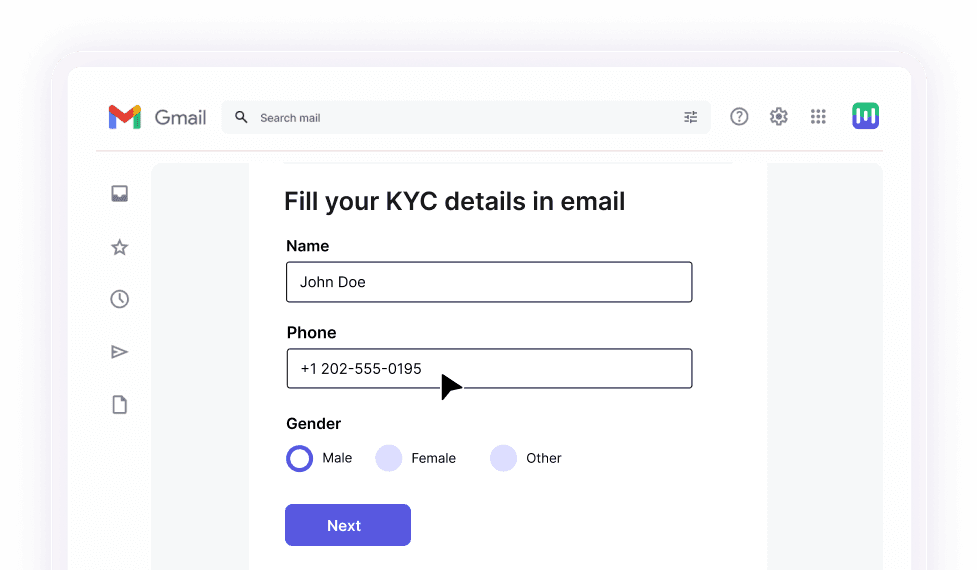
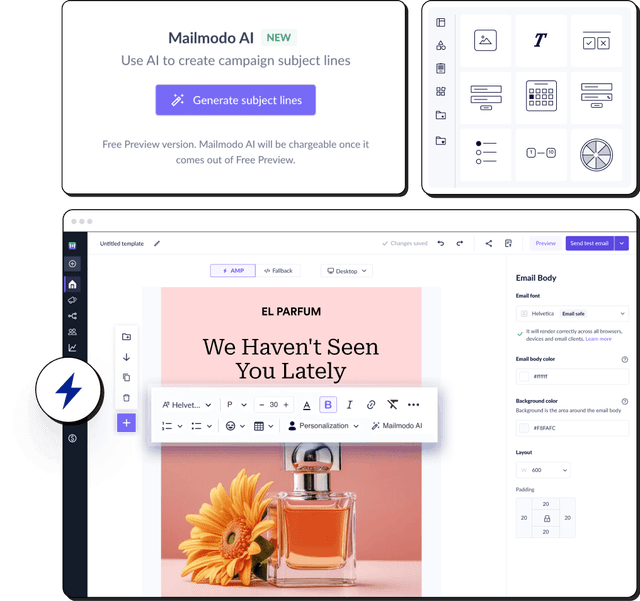
Mailmodo transforms SaaS email marketing by offering an all-in-one solution that combines interactivity, automation, and ease of use. Unlike traditional email platforms, Mailmodo enables businesses to create highly engaging, interactive emails. With its intuitive editor, you can design AMP-powered emails that let recipients book meetings, complete forms, and take actions directly within their inbox—eliminating friction and boosting conversions. This interactivity makes emails more than just a communication tool; it turns them into an immersive experience that enhances engagement and streamlines the customer journey.
Beyond interactivity, Mailmodo offers powerful features to help SaaS businesses optimize their email marketing efforts. These include:
Dynamic segmentation for precise audience targeting.
Email analytics to track performance and refine strategies.
A/B testing to determine the most effective content.
Email automation to streamline workflows.
Send time optimization for better engagement.
Personalization to create relevant, tailored experiences.
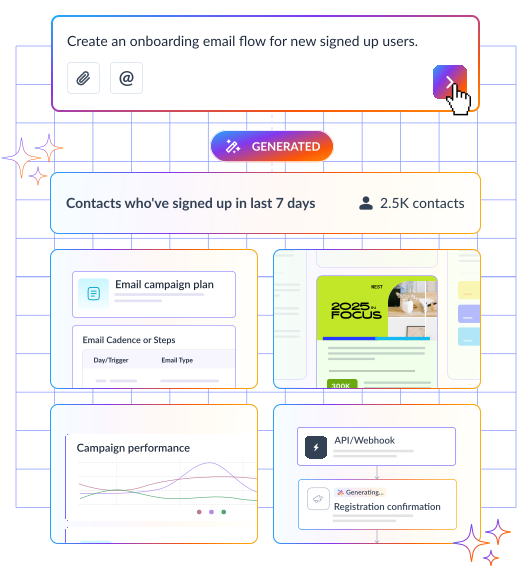
Mailmodo also leverages AI to assist with email writing, generate compelling subject lines, and even plan campaigns. Plus, its affordability compared to other ESPs makes it a smart investment for SaaS companies operating with limited resources.
By simplifying campaign management, delivering actionable insights, and enhancing engagement through interactive elements, Mailmodo empowers SaaS businesses to connect with their audience, drive conversions, and build lasting customer relationships.
Create and send AMP emails without coding in minutes
Conclusion
SaaS email marketing is a powerful tool for nurturing leads, driving conversions, and retaining customers. With the right strategy, businesses can engage users at every stage of their journey, delivering personalized, timely, and value-driven content. Platforms like Mailmodo simplify this process, helping SaaS companies create interactive, automated, and data-driven campaigns that maximize impact. By leveraging email marketing effectively, businesses can build stronger relationships, boost retention, and drive sustainable growth.