


It’s not uncommon in ecommerce to see loyal customers go quiet. They stop visiting your store, stop opening your emails, and even stop buying.
This inactivity doesn’t always mean they’ve lost interest forever. More often, they’re distracted, overwhelmed with options, or have simply forgotten about your brand. The challenge is bringing them back without sounding pushy or desperate.
That’s where an idle win-back email sequence becomes essential. Instead of sending one random “We miss you” email, a structured sequence gives you multiple chances to reconnect, rebuild interest, and guide customers back to purchase.
In this guide, you’ll learn how to build a complete idle win-back email sequence for your ecommerce store.
Why should you use an email flow?
Email works especially well for win-back campaigns in ecommerce because it’s personal, direct, and behavior-driven. You’re reaching customers who already know your brand and have purchased from you before, which makes email far more effective than paid ads or social posts.
With email, you can:
- Reach inactive customers directly in their inbox
- Personalize messages using past purchases and browsing behavior
- Segment users based on inactivity timelines
- Automate follow-ups without manual effort
- Control timing so messages feel helpful, not spammy
One email is rarely enough to re-activate inactive shoppers. People miss emails, ignore them, or open them without acting. A sequence gives you multiple touchpoints, so customers have more reasons and opportunities to return.
What is an idle win-back email sequence?
An idle win-back email sequence is a series of automated emails sent to previously active customers who haven’t engaged or purchased within a defined time period, to reactivate them.
These emails typically include:
- A friendly reintroduction or activity reminder
- A special incentive or offer
- One or more follow-ups
- A final urgency or FOMO-based message
How to build an idle win-back email sequence
Building an email sequence can be easy if you’re following a well-defined set of steps. Here are the steps for you to follow:
Step 1: Plan your campaign
Planning sets the foundation for your entire win-back flow. Without clear goals and structure, your emails can feel random or overly promotional. You can start by outlining the following for your email flow:
- Objective: Reactivate inactive customers and drive repeat purchases
- Target audience: Customers who purchased before but haven’t engaged in the last 3–6 months
- Core message: “We miss you, here’s what’s new and why it’s worth coming back”
- Number of emails: 3–4 emails
- Timeline: 5–7 days total
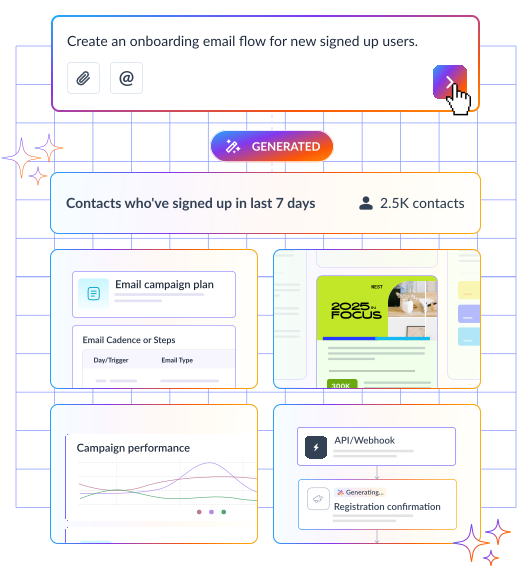
We asked Mailmodo AI to create a complete campaign plan for this idle win-back sequence. It generated clear objectives, recommended the number of emails, defined the theme of each message, and suggested ideal timing between emails. This gave us a solid plan we could quickly review and customize.
Take a look at the prompt we used. Click on the arrow to see the output we received.
Create a win-back email campaign plan for inactive ecommerce customers. Include objectives, number of emails, themes for each email, timing between emails, and the main CTA.
Step 2: Create audience segments
Audience segmentation ensures your win-back emails reach the right people at the right time. Sending these emails to active shoppers or brand-new users can do more harm than good. For an idle win-back flow, you can segment customers based on:
- Last purchase date
- Last website or app activity
- Email engagement history
- Total number of past orders
- Average order value
We used Mailmodo AI to quickly create an audience segment with:
- Customers who made at least one purchase
- No purchases in the last 6 months
- No website activity in the last 30–60 days
- Excluded customers who unsubscribed or marked emails as spam
Once it was done, we got the option to review, make edits using the builder, or ask AI to carry out the changes we wanted. Once we confirmed, Mailmodo AI created the segment instantly and it was ready to use for our campaign.
Create a dynamic segment of customers who purchased at least once but have not made a purchase or visited the website in the last 6 months. Exclude unsubscribed users.
Step 3: Create the email templates
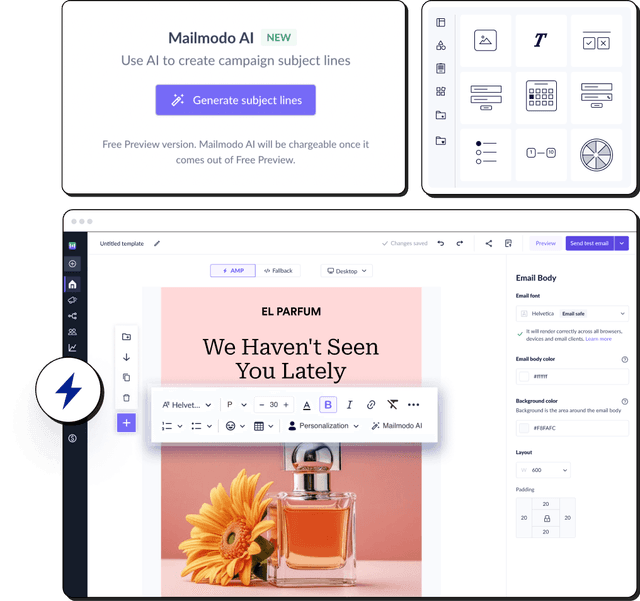
Once your audience is defined, it’s time to design the actual emails. Here’s a sample list of emails that you should be creating for your email sequence. We’ve also included sample prompts that you can use in Mailmodo AI to generate these email templates in minutes instead of having to spend hours creating them.
Email #1: Activity email
When to send: Day 1
Purpose: Reconnect and remind customers of your brand
What to include:
- Friendly “We haven’t seen you in a while” message
- New arrivals or recently launched products
- Soft CTA to browse the store
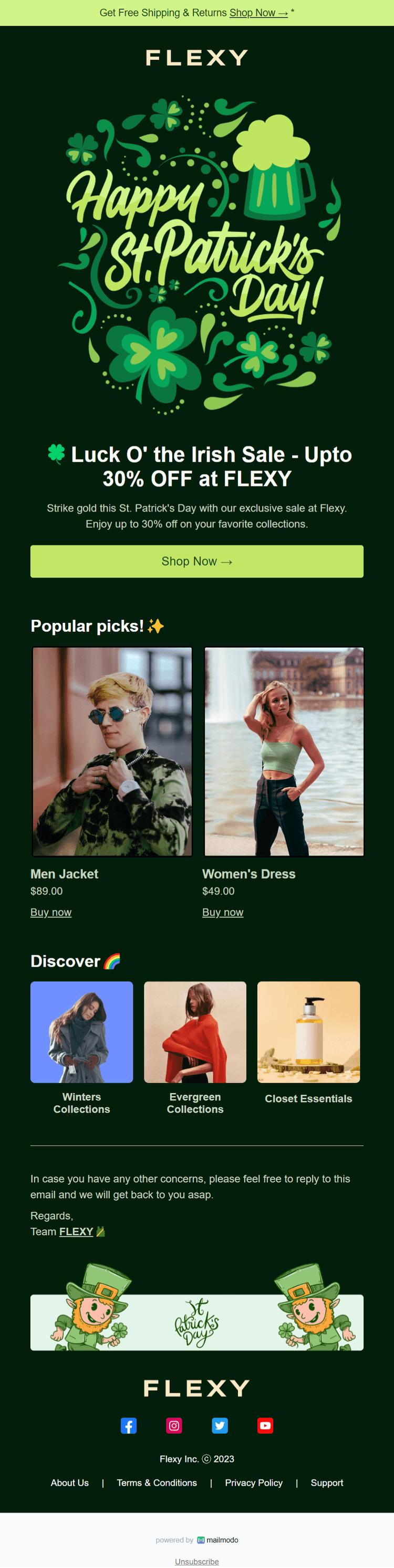
Here’s a sample prompt to generate this kind of email, along with the output it will produce.
Generate an ecommerce win-back email that reintroduces the brand to inactive customers.

Highlight new arrivals and include a friendly, non-promotional CTA to browse products.
Email #2: Special offer
When to send: Day 3
Purpose: Incentivize them to return
What to include:
- Exclusive discount or limited-time offer
- Clear benefit of redeeming the offer
- A CTA leading to product pages
- Subtle urgency without pressure
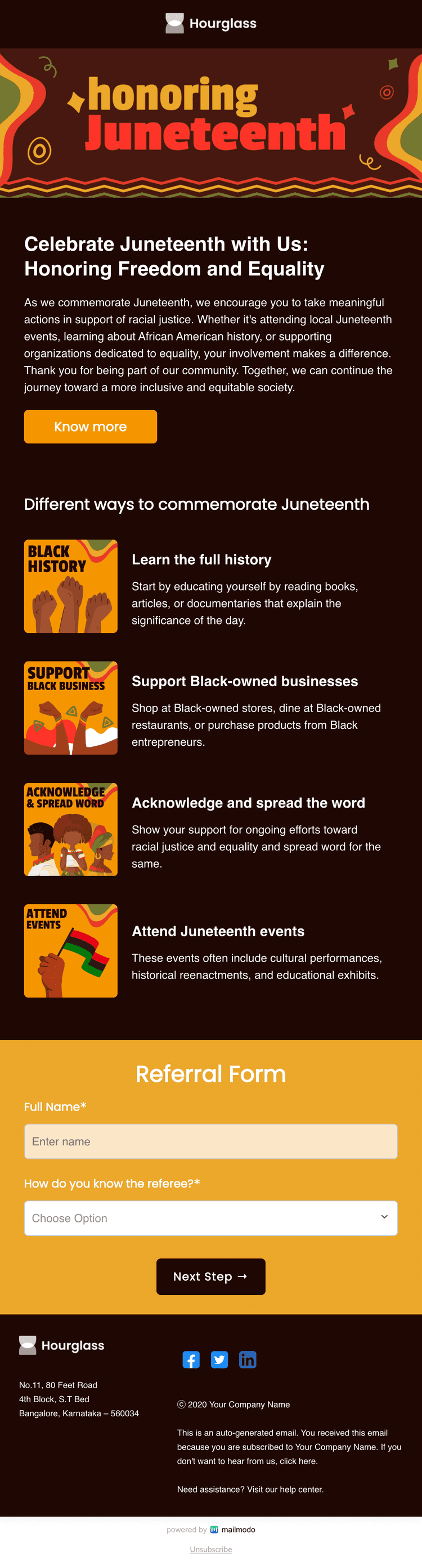
Here’s a sample prompt to generate this kind of email, along with the output it will produce.
Create a win-back email offering a special discount to inactive ecommerce customers. Focus on curiosity-driven subject lines and a clear CTA to shop.
Email #3: Follow-up email
When to send: Day 5
Purpose: Catch missed attention and reinforce value
What to include:
- Reminder of the offer
- Product recommendations
- Social proof
Here’s a sample prompt to generate this kind of email, along with the output it will produce.
Generate a follow-up win-back email for customers who did not act on a previous offer. Include product recommendations and a reminder CTA.
Email #4: FOMO
When to send: Day 7
Purpose: Create urgency and drive immediate action
What to include:
- “Last chance” or “Ending soon” messaging
- Stock scarcity or time-bound offers
- Strong CTA
Here’s a sample prompt to generate this kind of email, along with the output it will produce.
Create a FOMO-based win-back email highlighting a limited-time offer or low-stock products. Use urgency-driven language with a strong CTA.
Step 4: Build the automated workflow
Once your emails are ready, the next step is to automate them so every new user receives them at the right moment. Your re-engagement email sequence should include:
- Trigger: Customer becomes inactive for 6 months
- Delays: 0 days → 2 days → 2 days → 2 days
- Branching logic: If purchase is made → exit flow; if email unopened → continue sequence
- Exit criteria: Customer completes a purchase or enters another flow
You can use Mailmodo AI to generate this entire workflow automatically. It maps triggers, delays, branching logic, and exit rules in one go. After reviewing the journey, you can simply asked the AI to tweak timings and conditions to match your strategy.
Take a look at this sample prompt that you can use to generate this workflow:
Generate a complete automated workflow for an ecommerce idle win-back email sequence. Include triggers, delays, branching logic, and exit conditions.
Step 5: Analyze and improve
Win-back campaigns improve over time when you track the right metrics and optimize based on performance. Key metrics to monitor include:
- Open rates
- Click-through rates
- Conversion rates
- Revenue recovered
- Unsubscribe and spam complaint rates
You can ask Mailmodo AI to analyze the performance of your win-back sequence and suggest improvements. It will highlight which emails underperformed, where drop-offs occurred, and what changes could improve engagement.
Take a look at this sample prompt you can use:
Analyze my ecommerce win-back email sequence and suggest improvements to increase opens, clicks, and repeat purchases.
Conclusion
In ecommerce, inactive customers represent untapped revenue. An idle win-back email sequence gives you a structured, thoughtful way to bring those customers back without overwhelming them.
By combining email with sequencing, you can reconnect, re-engage, and convert past buyers using timely and relevant messages. With tools like Mailmodo, planning, creating, automating, and optimizing these sequences becomes much easier and faster.
A well-built win-back flow doesn’t just recover sales—it strengthens long-term customer relationships.


 Learn more about Mailmodo