



When a customer places an order on your ecommerce store, they’ve trusted your brand with their money and now expect clarity, reassurance, and updates without having to ask.
Customers may have multiple doubts and questions after checkout. Did the payment go through? When will the order ship? How can they track it? If these questions aren’t answered proactively, they usually turn into support tickets or worse, loss of trust.
That’s why an order confirmation email sequence is essential for ecommerce brands. Instead of sending a single transactional email with all the details crammed into one, a well-planned sequence keeps customers informed from order placement to delivery while reinforcing brand credibility.
In this guide, we’ll walk through how to build a complete order confirmation email sequence step by step.
Why should you use an email flow?
Email is the most reliable channel for order-related communication in ecommerce. Customers actively look for emails after making a purchase, which makes this one of the highest open-rate emails in the entire lifecycle.
Unlike SMS or push notifications, email allows you to share detailed information like order summaries, invoices, shipping addresses, and tracking links in a structured way. It also gives you room to reinforce your brand voice, set expectations, and reduce uncertainty.
Customers prefer multiple updates as their order moves from placed to shipped to delivered. Each touchpoint reassures them that everything is on track and reduces the need to contact support. This is where an order confirmation email sequence becomes more effective than a single email.
What is an order confirmation email sequence?
An order confirmation email sequence is a series of automated emails sent to customers after they place an order, keeping them informed about the status of their purchase until delivery.
It typically includes emails like order confirmation, shipping confirmation, delivery confirmation, and sometimes follow-ups for feedback or referrals.
How to build an order confirmation email sequence
Building an email sequence can be easy if you’re following a well-defined set of steps. Here are the steps for you to follow:
Step 1: Plan your campaign
Planning sets the foundation for a smooth and reliable post-purchase experience. In ecommerce, this sequence is less about selling and more about reassurance, clarity, and consistency.
Start by clearly outlining what this sequence should achieve and how long it should run. Key elements to define in your plan:
- Objective: Reassure customers and reduce order-related support queries
- Audience: Customers who successfully placed an order
- Messaging: Clear, factual, and brand-aligned communication
- Number of emails: 3 (order confirmation, shipping confirmation, delivery confirmation)
- Timeline: From order placement until delivery confirmation
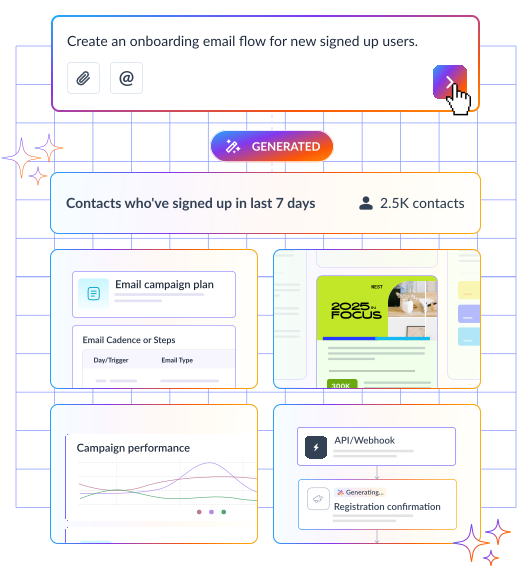
We used Mailmodo AI to create a complete campaign plan for our order confirmation sequence. It helped us map out the emails, their timing, and the role each message plays in the customer journey.
Take a look at the prompt we used. Click on the arrow to see the output we received.
Create an order confirmation email sequence plan for an ecommerce brand. Include objectives, number of emails, purpose of each email, and ideal timing.
Step 2: Define triggers
This ensures that only relevant customers receive this sequence and that messages are triggered at the right moment. For ecommerce order confirmation flows, emails are usually event-based and transactional.
The initial trigger will be successful placing of an order from your ecommerce store. You can either add delays later or have other triggers like:
Order status (shipped, delivered)
Payment status (successful)
Step 3: Create the email templates
Once your audience and plan are ready, the next step is creating the actual emails. This sequence typically includes three core emails, each aligned with a key order milestone.
Here’s a sample list of emails that you should be creating for your email sequence. We’ve also included sample prompts that you can use in Mailmodo AI to generate these email templates in minutes instead of having to spend hours creating them.
Email #1: Order confirmation email
When to send: Immediately after order placement
Purpose: Confirm the order and reassure the customer
What to include:
- Order number and order summary
- Product details and pricing
- Payment method and billing information
- Shipping address
- Estimated delivery timeline
- A short thank-you note aligned with your brand voice
Here’s a sample prompt to generate this kind of email, along with the output it will produce.
Generate an order confirmation email for an ecommerce brand. Include order details, payment summary, shipping address, estimated delivery date, and a friendly thank-you note.
Email #2: Shipping confirmation email
When to send: Once the order is shipped
Purpose: Inform customers that their order is on the way
What to include:
- Shipping confirmation message
- Tracking link or tracking number
- Courier or shipping partner details
- Expected delivery date
- Support contact information for shipping issues
Here’s a sample prompt to generate this kind of email, along with the output it will produce.
Generate a shipping confirmation email with tracking details, delivery timeline, and customer support contact information.
Email #3: Delivery confirmation email
When to send: After the order is delivered
Purpose: Close the loop and reinforce brand trust
What to include:
- Delivery confirmation message
- Thank-you note
- Order summary reference
- Feedback or delivery experience question
- Optional referral or loyalty nudge
Here’s a sample prompt to generate this kind of email, along with the output it will produce.
Generate a delivery confirmation email that thanks the customer, confirms delivery, and asks for feedback on the delivery experience.
Step 4: Build the automated workflow
Automation ensures these emails go out at the right time without manual effort. Your order confirmation email sequence should include:
- Trigger: Order placed successfully
- Delays: Immediate → until order shipped → until order delivered
- Branching logic: If order shipped → send shipping confirmation; If delivered → send delivery confirmation
- Exit criteria: Order marked as delivered or canceled
You can use Mailmodo AI to generate the entire workflow from scratch. It will map triggers, delays, and conditions clearly, making it easy to review and adjust before activating the flow.
Here’s a sample prompt that you can use:
Generate an automated workflow for an ecommerce order confirmation sequence. Include triggers, delays, branching logic, and exit criteria.
Step 5: Analyze and improve
Even transactional sequences need regular optimization. Monitoring performance helps you identify gaps that could lead to confusion or support requests. Some key metrics for you to track include:
- Open rate
- Click-through rate on tracking links
- Support tickets related to order status
- Delivery confirmation engagement
- Feedback responses
You can also ask Mailmodo AI to analyze your order confirmation sequence and highlight areas where clarity or timing could be improved to reduce customer queries. Here’s a sample prompt that you can use to do so:
Analyze my order confirmation email sequence and suggest improvements to increase clarity, engagement, and reduce support queries.
Conclusion
Order confirmation isn’t just a receipt; it’s a trust-building moment. A well-structured order confirmation email sequence keeps customers informed, confident, and satisfied throughout the fulfillment process.
Using email as a sequence rather than a single message ensures timely updates, fewer support issues, and a more polished post-purchase experience. With the right planning, segmentation, automation, and analysis, this flow becomes a strong foundation for customer loyalty.
Mailmodo makes it easier to plan, create, automate, and optimize order confirmation email sequences without unnecessary complexity. Once set up, the sequence runs in the background while you focus on growing your store.


 Learn more about Mailmodo