



Pricing changes are common for ecommerce stores. Seasonal sales, flash discounts, inventory clearance, or competitive price drops are all part of running an online store. But simply lowering prices on your website isn’t enough to move revenue.
Customers are busy, distracted, and usually need a reminder to act. Many of them may have browsed a product earlier, added it to cart, or delayed buying because of price concerns. If they don’t know the price has dropped, the opportunity is lost.
This is where a price drop email sequence becomes critical. Instead of relying on a single announcement, a structured email flow helps you inform, remind, and nudge shoppers toward a purchase at the right time. In this guide, we’ll walk through how to build a complete price drop email sequence for your ecommerce store.
Why should you use an email flow?
Email works exceptionally well for price drops in ecommerce because it reaches customers where purchase decisions often happen: in their inboxes. Unlike ads or social posts, emails don’t depend on algorithms or fleeting attention.
With email, you can:
- Reach customers directly with clear pricing updates
- Personalize messages based on products viewed or cart activity
- Segment users based on interest, intent, or lifecycle stage
- Automate timely reminders without manual effort
A single email rarely drives maximum results. Some shoppers even miss the first message, while others need urgency, and some only convert after multiple touchpoints. A sequence caters to all of them and ensures consistent visibility across the entire sale window.
What is a price drop email sequence?
A price drop email sequence is a series of automated emails sent to inform, remind, and motivate customers about a price reduction or limited-time sale.
It usually includes:
- A price drop announcement
- One or more reminder emails
- A final call before the sale ends
How to build a price drop email sequence
Building an email sequence can be easy if you’re following a well-defined set of steps. Here are the steps for you to follow:
Step 1: Plan your campaign
Planning sets the foundation for the entire email sequence. Without clarity on goals and timing, price drop emails can feel random or overly promotional. You can start by outlining:
- Objective: Drive purchases during the price drop period
- Audience: Leads, past customers, product viewers, or cart abandoners
- Messaging: Savings, urgency, limited-time availability
- Number of emails: 2–3 emails
- Timeline: Typically 5–7 days around the sale window
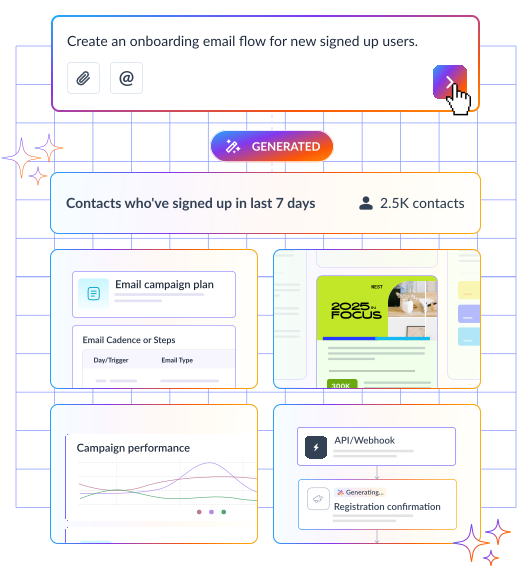
We asked Mailmodo AI to generate an entire campaign plan for a price drop email sequence and it delivered a detailed, actionable plan that we could review, customize, and turn into an automated workflow instantly. The output also outlined what emails to send, when to send them, and what each message should achieve.
Take a look at the prompt we used. Click on the arrow to see the output we received.
Create a price drop email campaign plan for an ecommerce store. Include objectives, number of emails, theme of each email, timing between emails, and the primary CTA for each email.
Step 2: Create audience segments
Segmentation ensures the price drop reaches people most likely to buy. Sending sale emails to everyone reduces relevance and engagement. For your price drop email sequence, segmentation can be based on:
- Browsed products
- Added-to-cart behavior
- Purchase history
- Engagement with past emails
We used Mailmodo AI to quickly create an audience segment for this email sequence. Once it was done, we got the option to review, make edits using the builder, or ask AI to carry out the changes we wanted. Once we confirmed, Mailmodo AI created the segment instantly and it was ready to use for a campaign.
Take a look at the prompt we used, along with the output we got.
Create a dynamic segment of ecommerce users who viewed or added products to cart in the last 30 days, have not purchased in the last 7 days, and are email-engaged.
Step 3: Create the email templates
Once the audience is defined, the next step is creating the actual emails to be sent. Here’s a sample list of emails that you should be creating for your price drop email sequence. We’ve also included sample prompts that you can use in Mailmodo AI to generate these email templates in minutes instead of having to spend hours creating them.
Email #1: Announce the price drop
When to send: Immediately when the sale or price drop goes live
Purpose: Inform customers and leads about the price drop and bring attention to the offer.
What to include:
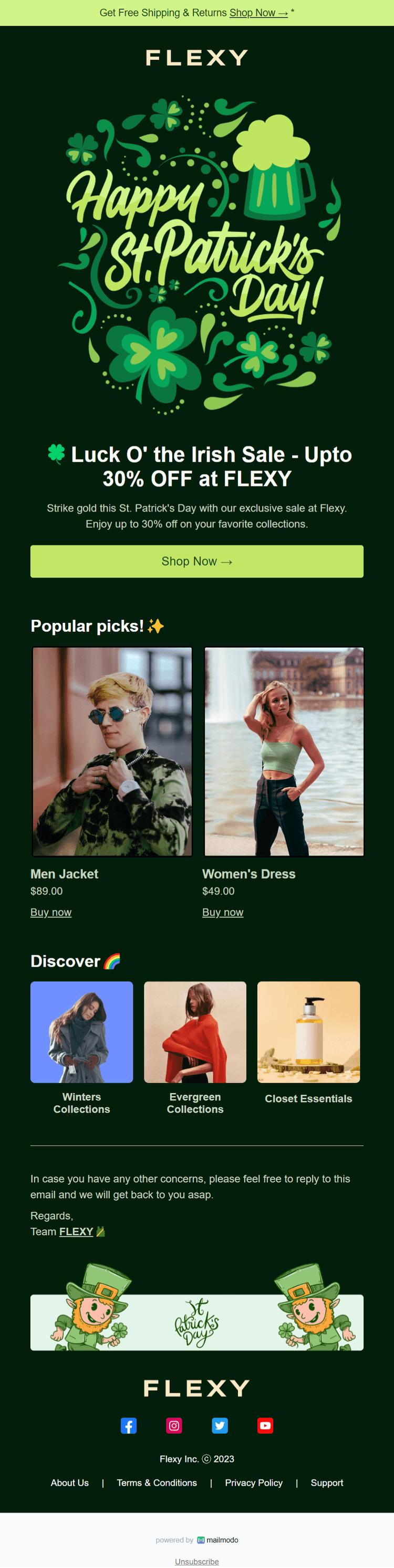
- Clear headline announcing the price drop
- Products or categories affected
- Discount or new price visibility
- Strong primary CTA to shop now
- Optional interactive elements to increase engagement
Here’s a sample prompt to generate this kind of email, along with the output it will produce.
Generate an ecommerce price drop announcement email. Include a clear headline, product highlights, discount messaging, and a strong CTA to shop now.
Email #2: Price drop reminder email
When to send: 2–3 days after the announcement
Purpose: Re-engage users who didn’t click or purchase after the first email.
What to include:
- Reminder of the price drop
- Social proof or best-selling product highlights
- Subtle urgency messaging
- Clear CTA leading back to the product or sale page
Here’s a sample prompt to generate this kind of email, along with the output it will produce.
Generate a reminder email for a price drop sale. Target users who did not engage with the first email and add light urgency without sounding pushy.
Email #3: Final call
When to send: 1 day before the sale ends
Purpose: Create urgency and capture last-minute buyers.
What to include:
- Sale ending reminder
- Countdown or time-sensitive language
- Clear restatement of savings
- Single, focused CTA
Here’s a sample prompt to generate this kind of email, along with the output it will produce.
Generate a final call email for a price drop sale ending in 24 hours. Focus on urgency, simplicity, and a single CTA.
Step 4: Build the automated workflow
Once your emails are ready, the next step is to automate them so every new user receives them at the right moment. Your price drop email sequence should include:
- Trigger: User enters the price drop segment
- Delays: 0 days → 2–3 days → 2–3 days
- Branching logic: If user purchases → exit flow; If user doesn’t engage → continue sequence
- Exit criteria: Purchase completed or sale ends
We used Mailmodo AI to generate the full automated workflow from scratch. It mapped triggers, delays, conditions, and exits. Once the output was ready, we just had to review the overall journey following a setup checklist and ask the AI to make the tweaks we wanted in the workflow.
Take a look at the prompt that we used and the output we received.
Generate an automated workflow for an ecommerce price drop email sequence. Include triggers, delays, branching logic, and exit criteria.
Step 5: Analyze and improve
Once the sequence is live, you can track the performance of your sequence to improve future campaigns. Key metrics to track include:
- Open rate
- Click-through rate
- Conversion rate
- Revenue per email
- Drop-off between emails
You can also ask Mailmodo AI to analyze the performance of your email sequence and suggest optimizations based on engagement and conversion data. Here’s a sample prompt that you can use for this:
Analyze my ecommerce price drop email sequence. Identify engagement gaps and suggest improvements to increase conversions and revenue.
Conclusion
Price drops are powerful conversion moments in ecommerce, but only if customers know about them and feel motivated to act. A structured email sequence ensures the offers don’t go unnoticed and gives shoppers multiple chances to make a purchase.
By combining smart segmentation, well-timed messaging, and automation, email becomes the most reliable channel for driving revenue during price drops. Tools like Mailmodo make it easier to plan, create, automate, and optimize these sequences using AI without unnecessary complexity.


 Learn more about Mailmodo